Can You Avoid World's Riskiest Airports?
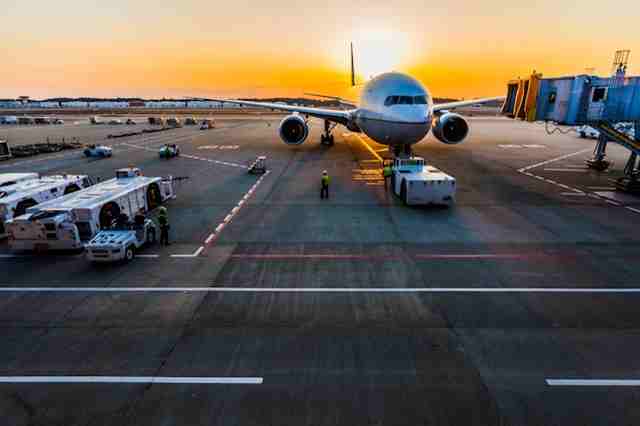
Air travel stands as the pinnacle of human ingenuity, offering the fastest method for traversing the globe. It has revolutionized the way we live, compressing continental distances into a matter of hours, and it serves as the essential nervous system of the modern global economy. Yet, for all its convenience and sophistication, aviation is a discipline that operates on thin margins. It remains one of the most demanding professions in existence, where success is measured by precision and the absence of error. A single miscalculation can have catastrophic consequences, and when you combine the complexities of modern aircraft with challenging topographical or meteorological conditions, the job of a pilot becomes an exercise in supreme skill.
Anatomy of a Risky Airport
What defines a "risky" airport? It is rarely about the luxury of the terminal, the efficiency of the check-in counters, or the rigor of the security protocols. Instead, risk is defined by the physical constraints placed upon the aircraft during its most vulnerable phases: takeoff and landing.
An airport is classified as challenging when it offers little room for human or mechanical error. The danger is often distilled into four critical variables:
- Runway Geometry: The length and width of the runway, which determine the available margin for braking or acceleration.
- Visibility: The environmental conditions—fog, cloud cover, or heavy precipitation—that can obscure a pilot’s view of the tarmac.
- Air Speed and Turbulence: The localized wind conditions that can buffet an aircraft, requiring intense focus to maintain stability.
- Topography: The surrounding landscape, such as mountain ranges, bodies of water, or urban density, which mandates precise, often steep, approach angles.
In these environments, standard procedures are often insufficient. Success relies on the judgment of a highly skilled, often "gifted" pilot who can synthesize real-time data and navigate the aircraft through a narrow window of safety.
The World’s Most Challenging Gateways
While many airports possess unique challenges, a few stand out as global benchmarks for aeronautical difficulty. These sites are not just popular; they are legendary among aviators.
Tenzing-Hillary Airport: The Gateway to the Sky
Located in Lukla, Nepal, this airport serves as the primary gateway for trekkers aiming for Mount Everest. It is a stunning display of what happens when aviation meets the Himalayas. The runway is merely half a kilometer long, carved into a mountain slope.
The physics of a takeoff here are unforgiving: if a pilot fails to achieve takeoff velocity before the end of the strip, the aircraft faces a 2,000-foot drop into the valley below. Conversely, failing to land correctly on the incline can result in a catastrophic collision with the mountain face. Once the throttle is engaged for takeoff, there is no turning back—the point of no return is reached almost instantly. It is a place where indecision is not just a mistake; it is a fatal flaw.
Paro International Airport: The Hidden Valley
Bhutan’s Paro International Airport represents one of the most technical challenges in aviation. Situated deep within a valley surrounded by Himalayan peaks reaching 18,000 feet, the airport is often invisible to the pilot until the final seconds of the approach.
From a technical standpoint, Paro is particularly difficult because standard Instrument Landing Systems (ILS) are useless here. In most modern airports, a ground-based radio signal guides the plane along a straight, predictable path to the runway. At Paro, following such a signal would lead an aircraft directly into the mountain range. Instead, pilots must perform a complex, manual approach, navigating between peaks while managing the descent. As of July 2026, fewer than 100 pilots worldwide are certified to land at Paro, a testament to the rigorous, specialized training required to unlock this hidden kingdom.
Cristiano Ronaldo International Airport: The Pillar in the Ocean
The risk profile of Cristiano Ronaldo International Airport in Madeira, Portugal, is governed by the Atlantic Ocean. The island’s geography is dominated by rugged terrain, leaving virtually no flat land for a traditional runway. The solution was an engineering marvel: a runway extended on massive concrete pillars over the ocean.
The challenge here is meteorological. The proximity to the Atlantic creates extreme, unpredictable wind shear and turbulence. Pilots must contend with sudden gusts that can threaten to push the aircraft off the narrow strip of runway. It is a battle between the engineering of the pillars and the raw, unbridled force of the ocean winds—a fight that occurs every single time a plane touches down.
The Traveler’s Dilemma: Risk vs. Reward
Should these airports be avoided? The answer is nuanced. In many cases, these airports are the only doors to their respective destinations. Paro is the sole international airport in Bhutan; there is no alternative if you wish to arrive by air. Lukla is the most direct path to the Everest base camp, saving trekkers days of arduous, often dangerous, land travel. Madeira’s airport is the only way to reach the island by air, allowing visitors to avoid the time-consuming and sometimes physically draining transit by ship.
While alternative transport exists for some of these locations, these alternatives often come at the price of time, increased costs, and physical exhaustion. But beyond the logistical trade-offs, there is a psychological element to flying into these locations. They represent the frontier of modern travel. There is an unmistakable prestige in landing at such iconic sites. They provide an experience that is etched into one's memory—a story to tell at parties, an adventure that separates the traveler from the tourist.
Ultimately, the inherent risks are managed by the most rigorous safety protocols in the world. Pilots are trained in simulators to handle every conceivable scenario, and only the most capable are permitted to operate in these sectors. When you fly into Lukla, Paro, or Madeira, you are witnessing the intersection of human courage and mechanical precision. You are moving across the world not by conquering it, but by expertly navigating its most formidable defenses. So, the next time you find yourself approaching a runway carved into a mountain or perched above the sea, take a moment to appreciate the view. You are not just on a flight; you are participating in one of the most sophisticated human endeavors on Earth.