Can You Survive the Coldest Village On Earth?
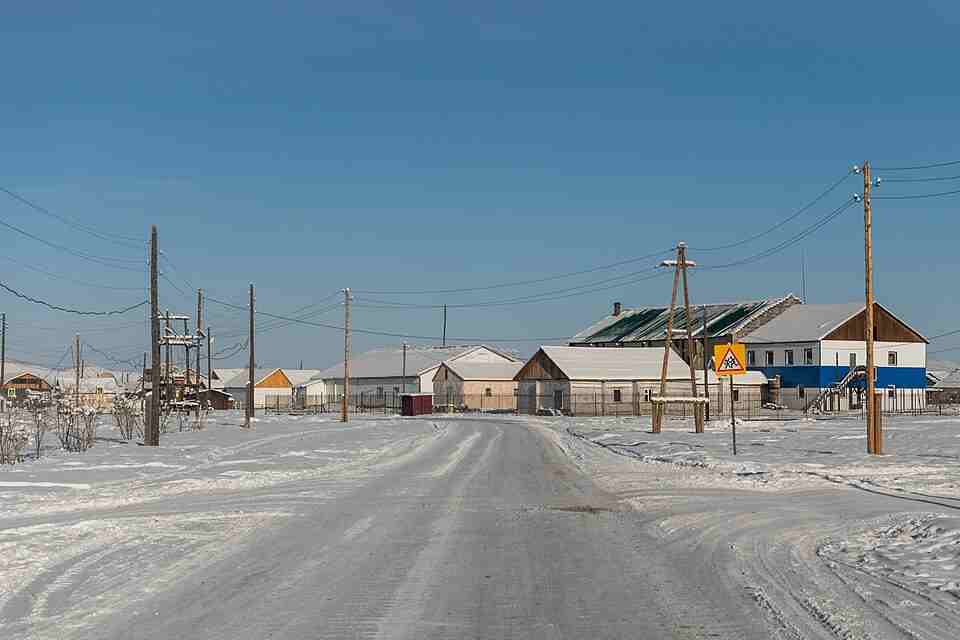
Are you a person who thrives in the summer sun, or do you find yourself yearning for the crisp, biting stillness of winter? If you are a devotee of the cold, perhaps you are ready to test yourself against the ultimate extreme. Hidden away in the heart of Siberia lies a place that defies the boundaries of human habitation—a settlement that exists not merely in spite of its environment, but in a delicate, daily negotiation with it. This is Oymyakon, a Russian village that stands as the undisputed coldest permanently inhabited place on Earth.
Oymyakon: The Coldest Village on Earth
When we contemplate the most frigid points on our planet, our minds naturally drift toward Antarctica. It is a continent defined by ice, where the mercury plummets to levels that make human life impossible. However, Antarctica is a wilderness of researchers and transient visitors; it has never supported a permanent, multi-generational human settlement. It possesses the most brutal climate, yes, but it lacks the soul of a community.
Oymyakon, by contrast, is a living, breathing village. Located in the Sakha Republic of Russia, it experiences temperatures that rival the interior of the Antarctic continent. Yet, here, families raise children, businesses operate, and daily life persists in the face of conditions that would paralyze most of the world. It is a testament to human resilience, standing as a defiant pocket of civilization at the edge of the world.
The Demographics of the Deep Freeze
According to recent census data, Oymyakon is home to a hardy population of approximately 400 to 800 people. Life here is dictated by the rhythms of the land. The residents depend heavily on traditional, nature-integrated occupations, primarily fishing and hunting. However, the village is not just a collection of cabins; it is a functioning society. You will find school teachers shaping the minds of the next generation, shopkeepers managing the flow of scarce goods, and essential workers like coal heating station operators whose jobs are the thin line between survival and disaster.
Communication here is a bridge between worlds; the locals speak the indigenous Sakha language, while also being fluent in Russian. It is a culture rooted in the ancient traditions of the North, preserved in the very air they breathe.
An Aging Population and the Call of the Modern
As with many remote regions in the 21st century, Oymyakon faces the quiet erosion of its demographic base. The younger generation, drawn by the siren call of modern conveniences, technology, and career opportunities in larger cities, is increasingly choosing to leave. Finding a resident under the age of 30 has become a rarity.
This migration has narrowed the lifestyle of those who remain. With a limited set of professional pathways and hobbies, life in Oymyakon is not defined by consumption or variety, but by endurance and the maintenance of the essentials. It is a life that requires a unique temperament—one that finds beauty in the harsh, unchanging landscape.
Life at -71°C
To understand the climate of Oymyakon is to grasp the concept of "subarctic" in its most terrifying form. The village holds a recorded historical record of -71°C, set back in 1924—a temperature at which human skin can freeze in seconds. During the peak of winter in January, the average temperature consistently hovers around -50°C.
Yet, there is a shocking duality to the region. In the brief, intense summer, Oymyakon transforms. In July, temperatures can reach a relatively balmy 20°C, and there have even been instances in recent years, such as in 2010, where the heat spiked to an improbable 34°C. This extreme swing of nearly 100 degrees throughout the year is a physical stressor that few other places on Earth experience.
The Engineering of Survival
Survival in Oymyakon is an industrial project. The village relies on a centralized coal-heating plant that serves as the heart of the settlement. It functions by heating massive volumes of water, which is then pumped through a network of insulated pipes to reach every home. Without this grid, the village would become uninhabitable within hours. Because the maintenance of this plant is a constant challenge, wood is often used as a vital backup fuel, keeping the fires burning even when the machines struggle to keep pace with the cold.
Agriculture in the traditional sense is an impossibility. The permafrost and the freezing air make large-scale crop production a fool’s errand. Instead, the community relies on dairy farming and the bounty of the wild—reindeer hunting and ice fishing form the backbone of their diet, providing the necessary sustenance to maintain body heat in a land where vegetables cannot grow.
The Mechanics of Motion
Transportation in Oymyakon is a masterclass in adaptation. If you are driving a car in the depths of winter, the golden rule is simple: never turn the engine off. Once the vehicle’s components are allowed to drop to the ambient temperature, the fluids will freeze, the battery will lose its charge, and the metal can become brittle to the point of structural failure.
Those who keep their cars in garages must ensure the structures are heavily insulated and heated. Without this protection, the weight of the car itself can cause frozen tires to shatter like glass. Even snowmobiles, the preferred mode of transport for covering long distances, require high-end synthetic oils to prevent the mechanical seizure that would spell doom in the wilderness. For heavier, localized transport, the Yakutian horse—a breed with thick, shaggy fur and sturdy, short legs—remains the most reliable partner, hauling sleds across the frozen tundra with an efficiency that no machine can replicate.
The Micro-Economy of Extremes
In recent years, a small, niche tourism economy has blossomed around Oymyakon. Adventurous travelers from across the globe seek out this village, eager to stand where the air itself feels like a physical assault. However, reaching this destination is an ordeal. Oymyakon sits hundreds of kilometers from the nearest major airport. The journey requires travelers to hire specialized vehicles and drivers who are trained to navigate the treacherous, ice-locked roads. A trip to Oymyakon is not a holiday; it is a multi-day expedition that demands professional-grade clothing rated for -50°C.
For the visitor, there is no hotel industry to provide comfort. You are a guest in the homes of the locals, who offer their spare rooms for a fee. This is a vital interaction; it helps sustain the village economy while providing the visitor with a window into life in the absolute extreme. The costs are high—not just for the lodging, but for the fuel required to keep the heating systems and vehicles running in such a remote corridor of the planet.
The "Lord of the Cold"
For those who survive the journey and successfully withstand the conditions, there is a token of their achievement: a certificate signed by 'Chyskhan', the mythical "Lord of the Cold." It is a badge of honor, a small paper record of the fact that you have looked into the abyss of the Earth's harshest climate and walked away.
Traveling, in its most popular sense, is often about the luxury of cities, the warmth of the sun, and the ease of a hotel stay. But there is another kind of travel—one that seeks the outer edges of human potential. Oymyakon is a destination for those who want to experience the raw, unadulterated power of nature. It is a place where you are reminded that humanity is a small, quiet presence in a world that is fundamentally indifferent to our comfort. If you have the spirit to endure, and the curiosity to see how life persists in the heart of winter, Oymyakon offers a perspective that no beach resort ever could. It is not just a visit; it is an encounter with the extreme, the cold, and the beautiful, frozen heart of our planet.