Caspian Sea - A 'Sea' With Land All Around!
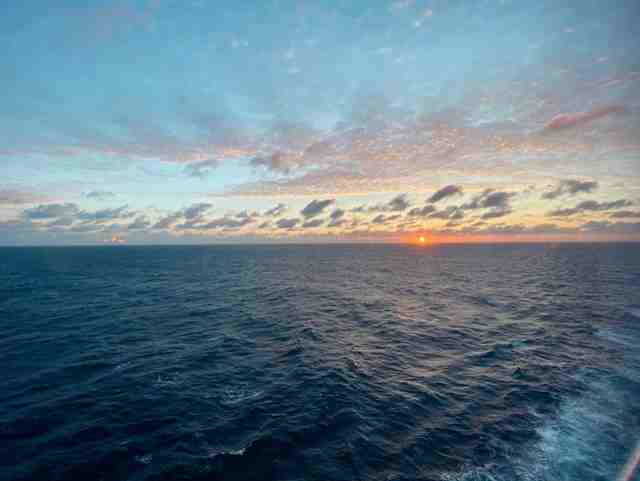
When we think of the sea, our minds naturally drift to images of crashing waves, the sharp tang of salt air, the silhouette of towering ships, and the vast, interconnected expanse of the global oceans. Yet, tucked away between the continents lies a body of water that defies these simple categorizations. The Caspian Sea lacks the rhythmic swells of the open ocean; it does not connect to the global maritime network, and its waters carry a flavor that is entirely its own. By any strict scientific definition, this colossal expanse is actually a lake—a landlocked basin holding its own secrets within the earth’s crust.
Why is it a Lake?
At its core, a lake is a self-contained basin, often described as an oversized pond that holds freshwater. The Caspian Sea, however, challenges this humble definition. It is an immense, sprawling body of water bordered by five distinct sovereign nations. Because it possesses no natural connection to any ocean, its water level is dictated primarily by the balance between inflow from rivers and the natural process of evaporation. Technically, it is the world’s largest inland body of water, making it a lake by definition. However, its sheer, breathtaking vastness makes the term "lake" feel insufficient. It is a sea in scale, a lake in geography, and a unique phenomenon of nature that sits firmly in the middle of both worlds.
The Lifeblood of the Basin
Where does such a massive body of water derive its sustenance? The majority of its volume is supplied by the mighty Volga River, which acts as the primary artery for the basin. While several other rivers contribute to its total water content, none of them provide the sheer volume of the Volga. One might wonder: if it is constantly fed by major river systems, why isn't it classified as an open sea? The answer lies in its lack of an outflow. There are no rivers flowing out of the Caspian to the ocean; its water stays within the confines of its landlocked basin. It is a closed system where the only way water leaves is through the relentless power of evaporation, creating a cycle that has remained stable for millennia.
An Enormity Beyond Measure
The Caspian Sea is staggering in its proportions. Spanning an area of more than 384,000 square kilometers, it is larger than many entire countries, including England and Bangladesh. Its topography is as diverse as the nations that border it, with uneven depths that create dramatic underwater landscapes. Even its tides, though subtle compared to the oceans, can rise as high as a meter, reminding us that it remains a dynamic and living entity.
The Five Nations of the Caspian
Five sovereign countries hold the shores of the Caspian: Azerbaijan, Iran, Turkmenistan, Russia, and Kazakhstan. Baku, the capital of Azerbaijan, stands as the largest city along its coast, serving as a hub for the cultural and economic activities that define the region. A clever way to remember these neighbors is the acronym TARIK:
- Turkmenistan
- Azerbaijan
- Russia
- Iran
- Kazakhstan
Whether you find yourself in the historic streets of Baku or the vast, rugged terrains of Kazakhstan, the Caspian remains a central feature, offering a different cultural lens through which to view its waters.
The Brackish Middle Ground
Is it salty or fresh? The answer lies in the middle. The Caspian’s water is classified as "brackish." It has a distinctly salty taste, but it lacks the heavy mineral concentration of the open ocean. It is a unique saline environment that supports a diverse ecosystem, one that has adapted specifically to these intermediate levels of salinity.
Geopolitics and the Definition Crisis
Because the Caspian sits on the blurred line between a lake and a sea, it has been the subject of intense international debate. Is it a sea, governed by established international maritime laws and the rights of international passage? Or is it a lake, governed by negotiated bilateral and multilateral treaties between the bordering states? This debate is far more than academic; it involves control over vital natural resources and the definition of borders that are essential to the regional stability of the five nations.
A Future Under Climate Stress
The Caspian Sea is currently facing a silent crisis: it is drying out. Global warming and increased water usage from its feeder rivers have caused water levels to fluctuate and decline. This is not just an ecological tragedy; it is an economic one. The region is rich in natural gas and oil, and as the shoreline shifts, the geopolitical importance of these resources only heightens. The future of the Caspian is tied to the global climate fight, and if it were to face significant decline, the international community would undoubtedly turn its attention to this region as a bellwether for climate-induced instability.
Cruising and Navigating the Waters
If you are planning to travel here, do not expect the traditional cruise ship experience. The Caspian is not a tourist-standard maritime destination in the conventional sense. However, adventurous travelers can sometimes secure passage on cargo ships, which occasionally have extra space for passengers, providing a raw, authentic look at the logistics of the basin.
For a more casual experience, you can book local boats in Baku for a short joy ride along the shore. Be advised, however, that this is a sensitive zone; military vessels frequently patrol these waters, and it is a space where one must always be mindful of local regulations and security protocols.
The Illusion of Swimming Across
Thinking of swimming or rowing across? Think again. With an average width of 320 kilometers and a staggering 1,200-kilometer stretch from north to south, the Caspian is not a casual crossing point. Unlike smaller lakes where rowing across is a weekend hobby, the Caspian is a vast, demanding expanse of water that commands respect.
Despite the endless debates about its status and the environmental challenges it faces, the Caspian Sea remains one of the most unique features on our planet. It is a place that feels monumental, a giant basin that holds the history of civilizations and the energy of the future within its brackish depths. Whether you approach it from the perspective of an explorer, a diplomat, or a geographer, the Caspian Sea is worthy of your attention. From the ground, it is a mystery of five nations; from space, it is a brilliant, sapphire-blue jewel set into the arid heart of the continent. If you ever have the chance, traveling to one of its five bordering nations to experience the Caspian firsthand is a journey into the heart of a truly distinct global wonder.