Ever Traveled to A Landlocked Country?
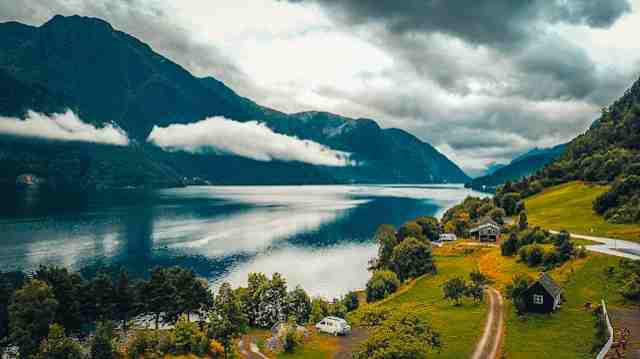
Where most of the sovereign countries in the world have direct access to a sea or an open ocean, there are a few countries, who don't have that access. They are called landlocked countries. As of 2026, there are around 40+ sovereign states in the world who are completely surrounded by other landmasses, existing in a unique geopolitical and logistical bubble.
Understanding Landlocked Nations
Being landlocked is not merely a geographical designation; it is a defining characteristic that influences a nation’s economy, foreign policy, and cultural interactions with the outside world. When a country lacks a direct coastline, it loses the immediate advantage of maritime trade routes, which historically have been the lifeblood of global commerce. These states must navigate complex relationships with their neighbors to secure transit corridors for their exports and imports.
List of Landlocked Countries by Region
Countries in Africa Africa contains a significant number of landlocked nations, many of which face unique challenges regarding infrastructure and regional stability.
- Botswana
- Burkina Faso
- Burundi
- Central African Republic
- Chad
- Eswatini
- Ethiopia
- Lesotho
- Malawi
- Mali
- Niger
- Rwanda
- South Sudan
- Uganda
- Zambia
- Zimbabwe
Countries in Asia The Asian landlocked states are diverse, ranging from the high-altitude terrains of the Himalayas to the vast, arid steppes of Central Asia.
- Afghanistan
- Armenia
- Azerbaijan
- Bhutan
- Kazakhstan
- Kyrgyzstan
- Laos
- Mongolia
- Nepal
- Tajikistan
- Turkmenistan
- Uzbekistan
Countries in Europe Europe’s landlocked countries are often defined by their mountainous landscapes or their position at the heart of the continent’s historical conflicts and treaties.
- Andorra
- Austria
- Belarus
- Czechia
- Hungary
- Liechtenstein
- Luxembourg
- Moldova
- North Macedonia
- San Marino
- Serbia
- Slovakia
- Switzerland
- Vatican City
South America Though South America is largely defined by its massive coastlines, it holds two significant landlocked states:
- Bolivia
- Paraguay
The Complexity of Isolation: Double Landlocked States
While being landlocked is a challenge, being "double landlocked" is an entirely different level of complexity. A double landlocked country is one that is surrounded only by other landlocked countries. This means that to reach an ocean from these states, you must cross at least two international borders. Currently, Liechtenstein and Uzbekistan hold this unique status. For these nations, every single trade route or transport path is entirely dependent on the political goodwill and infrastructure of their neighbors.
Surrounded by a Single Country
Some nations exist in a state of absolute enclave status, where they are completely surrounded by only one other sovereign country.
- San Marino and Vatican City: Both are enclaves within Italy, representing unique historical and cultural pockets.
- Lesotho: Surrounded entirely by South Africa, Lesotho’s topography is mountainous and its reliance on South African infrastructure is absolute.
Landlocked or Island – Which is Better for Traveling?
When we plan a trip, the geography of the destination dictates the very nature of the journey. Traveling to a landlocked country offers a different rhythm compared to the nautical allure of an island state.
The Appeal of the Road Trip
One good thing about a landlocked country is that you can reach it by roads. If the neighboring country of that landlocked country is a "friend state," then the process becomes easier. A road trip may even cost less than a flight or a ship-journey, and it offers a freedom that is hard to replicate. You can even drive your own car—with your family, friends, and even pets—to reach there (obviously, you need proper papers for that).
Not just cars, a train or bus journey is also an excellent choice. These modes of transport often allow for a more scenic experience. A car or train journey lets you experience the beauty of nature more vividly; you can see the landscape shift, watch the architecture change as you cross borders, and interact with the local scenery in a way that is impossible from thirty thousand feet in the air.
However, road and rail travel requires patience. It can be very time-consuming. You need to account for finding toilets, motels, and rest stops along the way. Additionally, in some regions, security can be a genuine concern, requiring careful planning and adherence to local travel advisories. Countries like Switzerland are highly recommended for road travel precisely because the alpine sceneries are so breathtaking that they demand to be witnessed at a slower, more personal pace.
The Challenge of the Island State
On the other hand, traveling to an island state is usually a bit tougher. You usually have only two choices—a boat/ship journey or a plane journey. In some cases, there are modern alternatives. You can actually go to England—which is an island state—from France, via the tunnel under the English Channel. For people who have never seen an ocean or a sea, traveling to an island state is a transformative experience, as the vast, open horizon becomes the central feature of the destination.
Is It Important to Know if a Country is Landlocked?
Knowing the geography of your destination is essential for logistical planning. As mentioned earlier, being landlocked may give you at least three more options to travel to a country. You may have the ability to go there by train, bus, or car, each offering a different cultural immersion.
Similarly, if you already know that your traveling destination is an island, you might have the unique option for a grand ship-journey, which is an adventure in its own right. The mode of travel often sets the tone for the entire trip before you even arrive.
An Interesting Fact
Despite not having any sea beaches, some of the landlocked countries have beautiful and popular travel destinations. Switzerland is considered by some as the "heaven on earth." Although it doesn't have any sea beach by definition, it has majestic lake shores which are no less serene or beautiful than an ocean shore. Nepal boasts the Himalayas, including the peak of Everest, drawing adventurers from every corner of the globe.
Interestingly, three of the five countries surrounding the Caspian Sea—Turkmenistan, Azerbaijan, and Kazakhstan—are landlocked, showcasing that even landlocked states can have massive bodies of water that mimic the characteristics of a sea. Meanwhile, Vatican City remains a well-known site, not just because it is the smallest country in the world, but because it serves as a central spiritual hub for the global Christian population.
The Economic and Strategic Reality
From an economic standpoint, the landlocked status is often a hurdle. Since large ocean ships cannot directly supply goods to these countries, it increases logistics costs and can sometimes stifle economic competitiveness. Goods must be offloaded at a port in a neighboring country and transported inland, adding time and expense to every transaction.
However, from a defense perspective, sometimes the same challenge can become an advantage. Being surrounded by land provides a natural barrier that can be easier to monitor than an expansive coastline. Before traveling to your next destination, always make sure whether you will get to chill out at a sea beach or if you are heading to a mountainous retreat, and plan your journey accordingly.
Whether you are navigating the high mountain passes of a landlocked state or catching a ferry to a remote island, every geography offers its own rewards. Understanding the land you are visiting is the first step toward a successful journey.