Flags of the World!
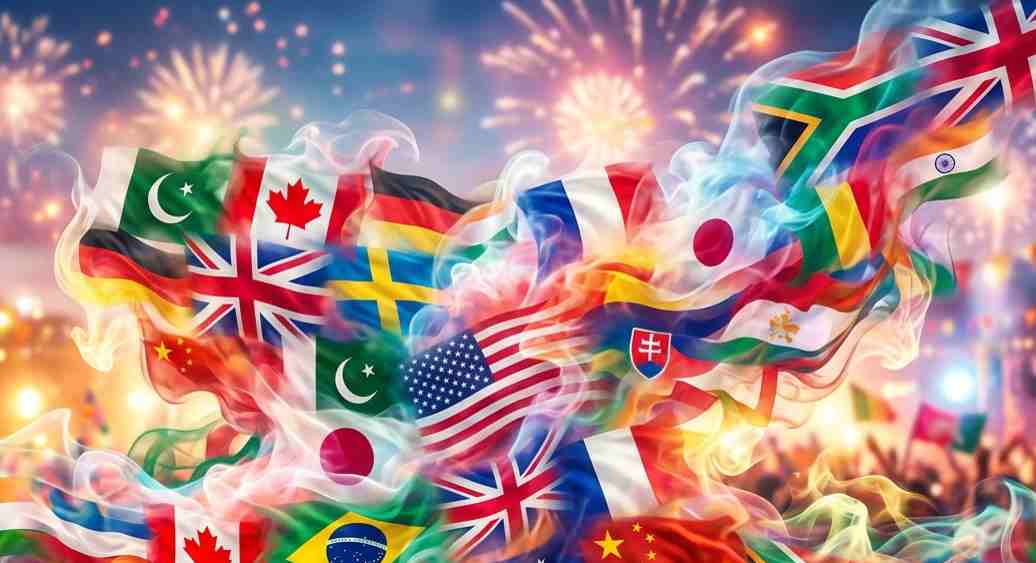
Flags are much more than mere pieces of cloth fluttering in the wind; they are the profound icons of sovereign states, the visual shorthand for a nation's soul. They encapsulate histories, ideologies, aspirations, and, above all, the collective sacrifices made to keep that banner held high. For any intrepid traveler, possessing the ability to recognize and understand the flags of the world is not just an academic exercise—it is a functional skill and a gateway to deeper cultural literacy.
The Practical Importance of Vexillology
Why should a traveler bother to memorize the intricacies of national flags? Beyond simple curiosity, recognizing these emblems offers tangible benefits:
- Diplomatic Navigation: In an emergency, identifying the flag of your nation's embassy or consulate is vital for seeking assistance. Similarly, recognizing the flag on a diplomatic vehicle can help you navigate traffic patterns or understand local security presence.
- The Power of Shared Passion: Imagine walking into a bustling stadium in a foreign land. By recognizing the flags of the competing teams, you can immediately find the section filled with fellow supporters. This shared visual language turns an intimidating environment into an instant community, multiplying the enjoyment of the event.
- Avoiding Cultural Faux Pas: Every nation views its flag with immense pride. Understanding which symbols are sacred or which flag arrangements are considered offensive can save you from unintentional disrespect, ensuring that your interactions with local authorities and citizens remain positive.
The Most Unique Flag: The Nepalese Exception
When we think of flags, our minds almost reflexively visualize a rectangle. The flag of Nepal shatters this expectation. It is the only national flag in the world that is not a quadrilateral; instead, it consists of two stacked triangles. This unique geometry is not just a quirk of design—it represents the Himalayan mountains and the two major religions of the nation, Hinduism and Buddhism. It is a stunning example of how a flag can tell a story about geography and belief before you even examine its colors.
Celestial Emblems: Stars and Crescents
Stars are perhaps the most common design element in the world of vexillology, appearing on approximately 40 different national flags. The United States holds the record for the highest number of stars on a single flag—50, representing its union of states.
In many cultures, the star is coupled with the crescent. This combination is deeply symbolic in the Islamic world, appearing on the flags of Turkey, Pakistan, Malaysia, and Algeria, among others. These symbols often represent faith, progress, and the divine, serving as a powerful link between the nation and its religious heritage.
The Confusion of Similarity
For the uninitiated traveler, the sheer similarity between some national flags can be a source of genuine confusion. Take, for instance, the horizontal tricolors of Germany (black, red, gold) and Belgium (black, yellow, red), which, while distinct in orientation and hue, can catch a traveler off guard. Similarly, the vertical tricolors of Russia, France, and the Netherlands—while different in their ordering—often cause a momentary pause. The flags of Ireland and Ivory Coast are particularly notorious; they are near-identical, distinguished only by the left-to-right versus right-to-left orientation of their green and orange stripes. Australia and New Zealand also present a classic challenge, as both utilize the British Union Jack and the Southern Cross, requiring a keen eye to spot the differences in star count and color.
Circles and Complexity
Many flags utilize circular motifs to denote unity or a central focus. A plain, simple circle is an icon of elegance, as seen on the flags of Bangladesh and Japan. However, other nations have pushed this design into more complex territory. Consider the flag of Brazil, which features a globe inscribed with a national motto, or the flag of India, which showcases the Ashoka Chakra, a 24-spoke wheel representing the "wheel of law." These designs add layers of historical and philosophical meaning, turning the flag into a complex artifact of national history.
The Oldest Flag in Continuous Use
History is woven into the fabric of the Danish flag, the Dannebrog. It is widely accepted as the oldest national flag in continuous use in the world, with documented origins dating back several centuries. Its design—a white Scandinavian cross on a red field—has remained a steadfast symbol of Danish identity for over 350 years, serving as a powerful testament to the stability and longevity of the nation.
The Nordic Cross: A Shared Identity
The Nordic region presents a masterclass in flag design. Three Scandinavian countries (Norway, Sweden, Denmark) and two additional nations (Iceland, Finland) share a common design element: the Nordic Cross. While the base design is identical, the variation in color combinations tells a distinct story for each state. Learning to distinguish these is a simple task once you memorize the color pairings—for example, the blue cross on a white field for Finland versus the yellow cross on a blue field for Sweden. These flags serve as a visual map of the deep historical, linguistic, and cultural ties that bind the region together.
Flags That Never Bow: The Eternal Icons
In most nations, the act of flying a flag at "half-mast" is a universal sign of state mourning. Yet, some flags are legally and ceremonially forbidden from being lowered. This practice is common in nations where the flag features sacred religious text. The flags of Saudi Arabia, Iraq, and Afghanistan contain Islamic inscriptions, such as the Shahada. Because these symbols represent a holy text rather than just a political entity, the flags are treated with the sanctity of a religious artifact and are never flown at half-mast, even upon the passing of a head of state.
The Color Theory of Nations
Is there a country today whose flag consists of only one solid color? The answer is a resounding no. Modern national flags are composed of at least two, and usually three or more, colors to ensure clarity and symbolic depth. In historical contexts, we can find instances of single-colored flags—such as the plain white flag used during periods of French history—but in the modern era, the complexity of a multi-colored design is a requirement for international recognition.
A Final Thought on National Icons
National flags are the heartbeat of a country, captured in fabric. When you look closely at a flag, you are not just looking at a design; you are observing a summary of a nation's geography, its faith, its historical unions, and its cultural pride. The next time you set foot in a new country, take a few minutes to study the flag flying over the airport or the government office. Research its meaning. Look at how the colors play against the sky. By doing so, you move beyond the role of a tourist and become an observer of national history. Treat these flags with the respect they command, and perhaps consider the stories they represent the next time you share your travels on social media—those flags represent the very soul of the places you are lucky enough to explore.