Mont Saint Michel - Less Popular Than the Eiffel Tower and the Louvre
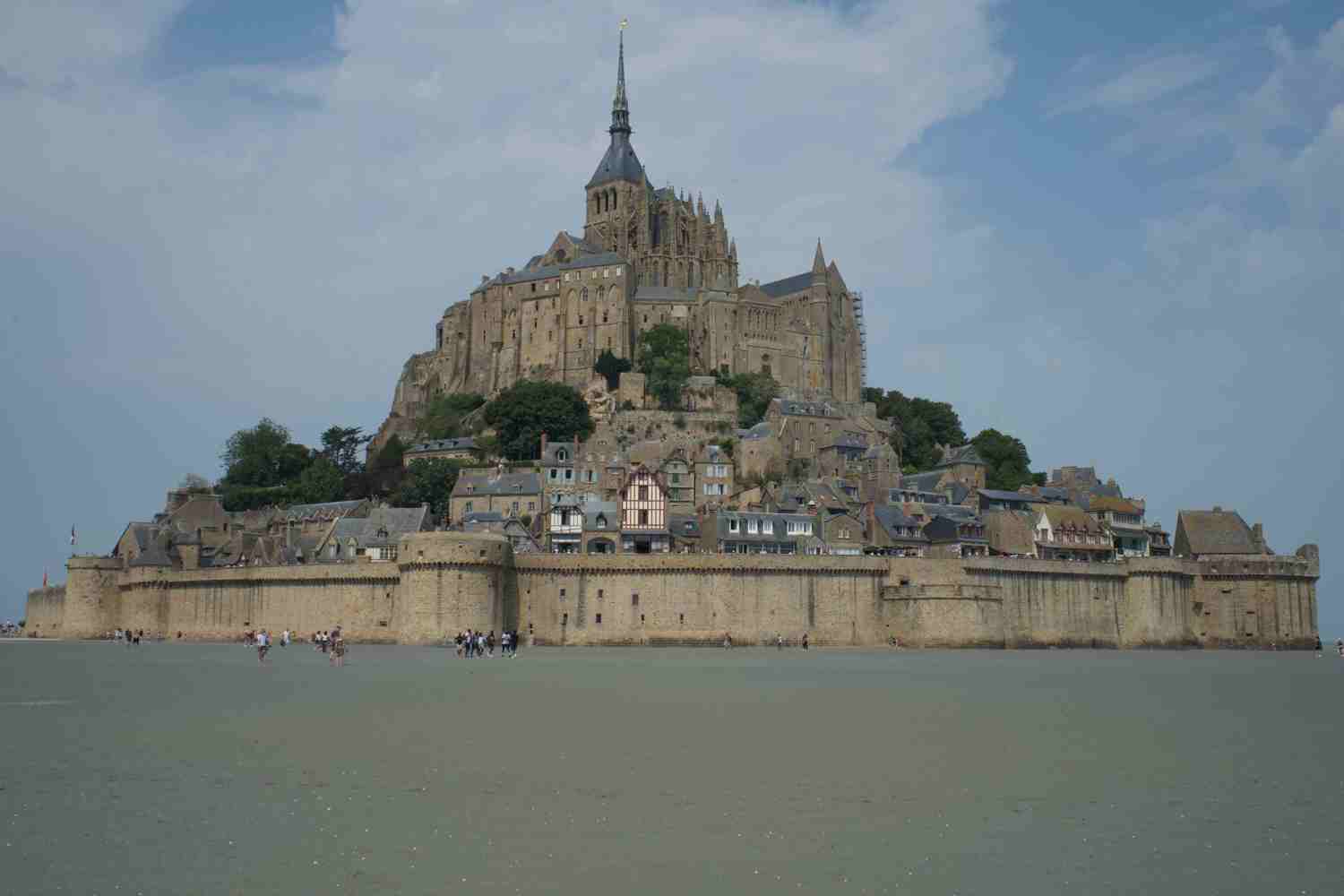
At first glance, you might mistake it for the fairytale castle that graces the opening credits of Disney movies. But despite its fortified walls and soaring spires, Mont Saint-Michel is not a castle at all. It is, instead, one of France’s most captivating wonders—a tidal island that seems to emerge directly from the sea. While it draws nearly three million visitors annually, it remains a slightly quieter, more mystical alternative to the dense crowds of the Eiffel Tower or the Louvre. As a UNESCO World Heritage site, it stands as a testament to the intersection of human devotion and the untamed rhythms of the Atlantic.
More Than a Fortress: The Abbey of the Sea
Though the granite walls and defensive ramparts suggest a fortress built for war, Mont Saint-Michel is fundamentally a spiritual complex. At its summit stands the Abbey, a magnificent monastery that has served as a center of religious life for over a millennium.
To understand the site, one must understand the Abbey. It is not merely a church; it is a self-contained universe for monks and nuns. Beyond the sanctuary where prayers are chanted, the complex houses dormitories, extensive libraries, serene gardens, and workshops, all designed to make the community entirely self-sufficient. Today, the village at the base of the Abbey is a labyrinth of winding, narrow streets, quaint shops, and historic houses, creating a vibrant, living atmosphere that has survived for centuries. While it functions as a world-class tourist destination, the architectural heartbeat of the island remains the Abbey itself.
The Quiet Guardians: Who Calls the Island Home?
You might wonder if anyone truly lives in such a surreal, isolated place. Because the island is an active religious center, it is home to a small, dedicated community of monks, nuns, and priests. However, the "resident" population is remarkably small. During the day, the island is a bustling hive of activity, staffed by French gendarmes, private security agents, and a dedicated team of administrators, shopkeepers, and firefighters who ensure the safety and function of the site.
Yet, once the tide rushes in and the last of the day-trippers have departed, the island empties. The security teams and workers commute to the mainland daily, leaving only a tiny core of permanent residents—usually numbering between 25 and 30 people—to inhabit the island overnight. There is a profound stillness that settles over the granite streets after dark, a rare tranquility that only those who stay on the island can truly appreciate.
A Millennium of History
The story of Mont Saint-Michel is one of endurance. Its history spans more than a thousand years, beginning in 708 AD when Bishop Aubert of Avranches received a vision and built a small church on the islet. By the 10th century, it had blossomed into a major Benedictine monastery, drawing pilgrims from across Europe.
The island’s history has not been without conflict. During the Hundred Years' War, the fortress walls were reinforced, making it a nearly impenetrable defensive position. In the centuries that followed, the island’s role shifted dramatically; after the French Revolution, it was repurposed as a state prison. It wasn't until the 1860s that the prison was closed, paving the way for a massive series of architectural restorations. In 1979, its cultural and historical significance was solidified when it was designated a UNESCO World Heritage site, ensuring its preservation for future generations.
Practical Tips for Your Pilgrimage
If you are planning to visit, navigation is straightforward. Entering the island itself costs nothing, though to step inside the Abbey, you will need to purchase a ticket. As of 2026, the price is quite reasonable—typically under 20 euros, even during the peak summer months.
It is worth noting that certain groups, including children, EU citizens between 18 and 25, and individuals with disabilities and their caregivers, can often enter for free. Regardless of your status, always carry a valid form of identification, as you may be asked to prove your age or nationality at the entrance.
Is the Experience Exclusively Religious?
A common misconception is that Mont Saint-Michel is intended only for practicing Christians. This could not be further from the truth. The island, the village, and even the Abbey are open to all, regardless of faith or background. Visitors from every corner of the globe and every belief system are welcomed to explore the site’s history and architecture. You will not be asked about your religion here; the focus is on the human accomplishment of building such a masterpiece in such a precarious location.
Dress Codes and Atmosphere
While Mont Saint-Michel is a place of religious significance, it does not mandate a strictly formal dress code. You do not need to worry about being turned away for your outfit, but a sense of decorum is appreciated. When selecting your attire, keep two factors in mind: the coastal climate and the religious setting.
The winds blowing off the Atlantic can be powerful and unpredictable. Wearing very short clothing, like a mini-skirt, can be impractical and uncomfortable in the coastal breeze. Furthermore, because you will be walking through an active religious site, it is a sign of respect to dress with a degree of modesty. Covering your knees is a simple, effective rule of thumb that applies to both men and women, ensuring you feel at ease in both the village streets and the sacred halls of the Abbey.
The Tidal Spectacle
What truly sets Mont Saint-Michel apart is the dramatic phenomenon of the tides. The island sits in a bay known for having some of the most extreme tidal ranges in Europe. During a high tide, the surrounding landscape is completely reclaimed by the sea, turning the island into an isolated jewel in the water. At low tide, the sea recedes for miles, exposing the vast, shimmering mudflats that surround the island. Seeing the site at both extremes offers two completely different photographic perspectives—one of a floating fortress and another of a grand, ancient monument standing proudly on the seabed.
Why the Gap in Popularity?
It is often asked why Mont Saint-Michel does not command the same "must-visit" status as the Louvre or the Eiffel Tower for the first-time traveler. The answer is primarily logistical. The island is located approximately 360 kilometers west of Paris, in the coastal region of Normandy.
For many tourists, a trip to France is synonymous with a trip to Paris, and the prospect of traveling several hours by train or car to the coast can seem daunting. As a result, the island receives roughly half the annual traffic of the major Parisian landmarks. However, this is changing. As social media and online travel guides bring the unique beauty of Normandy to the forefront of global awareness, the number of people making the trek is steadily increasing.
Mont Saint-Michel may be a little harder to reach than the monuments of Paris, but the journey is part of the reward. It is a place of rare beauty, historical weight, and natural drama. If you are touring France, do not let the distance deter you. It is a destination that stays with you long after the tide has come back in, making it an essential chapter in your own French story.