Oceans of Time - Time Zones Around the World
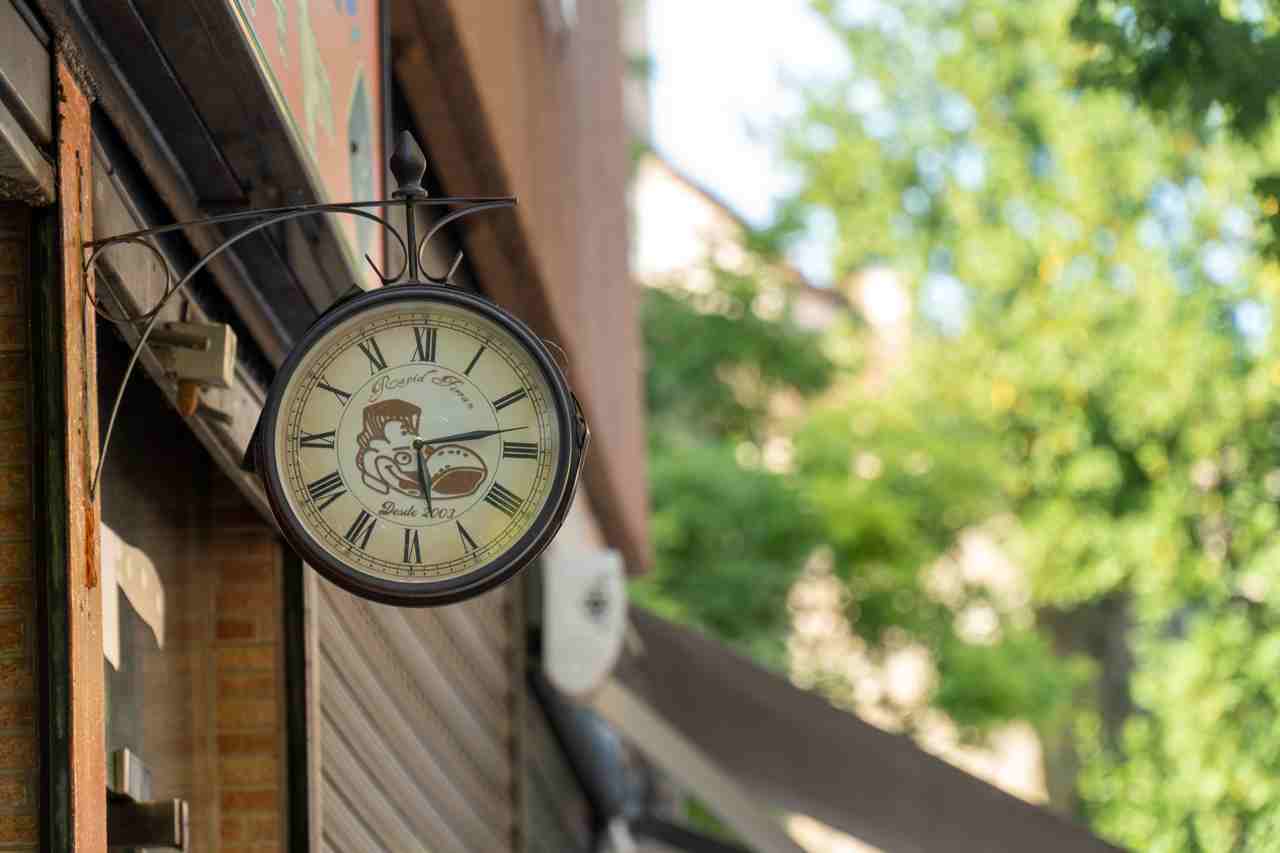
If you have ever traveled abroad from your country or state, one of the very first things you did after landing at the airport was probably adjusting the time on your watch. Just after one flight, your whole daily routine can change. As a traveler you must be aware of how different time zones work. Otherwise you may face extreme consequences.
How many time zones around the world?
There are primarily 24 time zones - one for every 15 degrees if you consider the earth a 360 degree sphere. However, many other factors may add to the number.
Why so many time zones?
As we know, the earth is mostly identical to a sphere. It is also moving around the sun and on its own axis. This movement has a west to east direction which results in the sun rising in the east and setting in the west.
Now consider the earth to have a 360 degree circle from east to west. If you travel from east to west or west to east, you see the sun at different positions in the sky. If you are in Saudi Arabia and you can hypothetically, instantly travel to London, you will get at least 3 hours before the sun even rises.
With even a few meters of movement from east to west or west to east, the time changes for you. However, considering so many hundreds of time zones around the world would be very problematic, so there are primarily 24 time zones.
Where is the 0° of this 360°?
Since we are considering the earth to be a sphere and a 360° circle on the east and west direction, the simple question rises - from where do we start calculating the degrees? Or in other words - where is the 0°?
The Royal Observatory In Greenwich, London is considered the 0° point. The time zones are primarily based on how west or east it is from this central point.
The time zone in Greenwich or in overall United Kingdom is UTC+0. Now you may wonder what this UTC thing is? It is globally considered as the time standard. It stands for Coordinated Universal Time. Think of it as a measurement standard. It's the time at 0°. All the other time zones in the world are described by how much they differ from the UTC. For example, London differs 0° from the UTC since Greenwich itself is in London. So it is UTC+0. If you go west from London e.g., New York, it is 5 (except summer) time zones away on the west. So New York's time zone is written as UTC-5. Similarly, Pakistan is 5 time zones away on the east from UTC, so Pakistan's time zone is described as UTC+5.
Some countries' time zones are described in fractions. For example, the time zone in India is UTC+5:30, Nepal is UTC+5:45.
Can you extract the time difference by seeing the UTC time?
When you are looking at an UTC time, the exact number e.g., +2, +6, -5 are considered as the hour difference from the UTC.
For example, Pakistan is UTC+5, which technically means that clocks in Pakistan are 5 hours ahead of the clocks in London. So when you are in Pakistan, watching a football match at 11 pm, your friends in London are watching the same match at 6 pm. Similarly UTC-5 means 5 hours behind the London time. If you are in New York, watching a football match at 6 pm, your friends in London are watching the same match at 11 pm local time.
What about when you are in Pakistan and your friends are in New York?
In that case, simply subtract the other UTC hour value from yours. So, the time in New York is UTC-5 has the value -5 and your time in Pakistan is UTC+5 has the value +5. Subtracting the other number from your number gives 5-(-5) = +10. You are simply 10 hours ahead from New York when you are in Pakistan.
Similarly, when you are in Pakistan and your friends are in Bangladesh, your time is UTC+5 and your friends have the time UTC+6. If you subtract their value, which is +6 in this, from your value (+5), you will get 5-(+6) = -1. It means you are 1 hour behind your friends in Bangladesh.
What about the minutes?
Same thing goes for the minutes as well. Usually minutes are written after a ':' while writing as a UTC time. For example, if you are living in Pakistan, your time by the watch is UTC+5:00. But your friends in India are living in the time zone UTC+5:30. So, subtract their minute value and you will get 0 minutes-(+30 minutes) = -30 minutes. It means you are 30 minutes behind the time by their clock.
A simple exercise
Can you do the following exercise - A football match will start in Barcelona, Spain at 7 PM local time. If you are living in Mumbai, India, at what time should you open your TV to watch the match? [Spain observes UTC+1 (except summer) and India observes UTC+5:30. The match is taking place in the winter.]
Do all the places in a country must have a single time zone?
Not at all! In fact, even in the smallest of countries, time differences are observed. If the country is large enough, a single country can have multiple time zones inside it.
The mainland USA is covered by 4 time zones! They span from UTC-5 to UTC-8 (except summer). So within the USA you can have 3 hours difference in clocks!
In Europe, they have a time standard called CET or simply Central European Time. It is UTC+1 during the winter and during the summer it is UTC+2.
What about day light saving time?
Daylight Saving Time or DST is observed in around 70 countries of the world. In most countries in the world, day time becomes longer during the summer or spring time. So setting the clock one hour ahead during the summer makes people start working one hour earlier during the summer. As you may already know or have guessed, the primary reason is to save energy by working under the sunlight instead of electric lights.
As a traveler should you bother about the time zones?
Actually, understanding the time zones is important not only for travelers but also for professional works. In today's world, online meetings are very common. If you have a client living in Washington and you are living in India and you don't understand the UTC time he mentions, you will probably be late for the meeting or you may even miss the meeting.
You may miss television shows like live sports or live events such as, the Academy Awards (Oscars), if you misunderstand the UTC times at which they are scheduled to be broadcasted.
From a traveler's perspective, landing at the airport is one important part of every journey. If you land at midnight, it can cause you security risks. So, understanding time zones may help you book plane or ship or train tickets for the right times.
The title of this article starts as 'Oceans of time...'. It's from the movie 'Bram Stoker's Dracula' where Gary Oldman said, "I have crossed the oceans of times to find you." In reality, time zones Do change across the oceans. If you are a traveler, you better be aware of it.